
COP30: WE WILL NEED EVERYONE

Updated: Jan 6
This article was published in the "Integral Sustainability" column of Issue 201 of Leite Integral Magazine - click to access the complete issue.
What the world's largest climate conference revealed for Brazilian milk production, and why the next decade demands data, transparency, and real-world implementation.
In the last edition, in the column "Time Doesn't Stop ," I mentioned that I would be traveling to COP30. Now, with the conference taking place in the Amazon and Brazil at the center of global negotiations, I bring you a different format, sharing my direct perceptions from Belém and what these intense days mean for the future of milk production.
The title of this column refers to a verse from the song "Sal da Terra " by Beto Guedes and Ronaldo Bastos, which calls for unity and the collective construction of a possible world. This message accurately reflects the atmosphere of COP30, marked by implementation, shared responsibility, and the urgent need for cooperation between countries, sectors, and people.
What I present here is a direct look from the center of climate discussions to the field, an invitation to reflect, act, and join forces to transform.
When a dream meets the Amazon
Two years ago, at a pre-implementation meeting of the SAI Platform, we were invited to share a dream. Mine was clear: to participate in a COP. I was already immersed in discussions about sustainability in milk and seeking to understand, in depth, how negotiations, commitments, and positions that shape global actions aimed at addressing the climate crisis are born.
Two years later, I embarked for Belém. I fulfilled my dream, and experienced something even greater. My first COP was in the Amazon, in Brazil, a symbolic and transformative setting. I was accredited as press by Revista Leite Integral, but I also went as a veterinarian, producer, consumer, and entrepreneur, with the purpose of learning, sharing, and contributing so that more and more producers choose the path of sustainability ; that more technicians know how to guide this path; that industries value these efforts; and that consumers understand where the food they consume comes from and what story it carries. My goal was to connect the global discussions of the COP with the reality of milk production, a challenge that lies not in the conference itself, but in the complexity of translating science, politics, and climate into the daily life of the field, something that demands responsibility, listening, and courage.

What exactly is COP?
COP stands for Conference of the Parties to the United Nations Framework Convention on Climate Change, the UNFCCC. It was within this process that the Kyoto Protocol and the Paris Agreement emerged. COP discusses climate change, not sustainability in the broad sense, which is important to remember.
COP30 was marked by implementation. The focus was on advancing the practical delivery of actions needed to mitigate climate change, while also discussing climate finance for adaptation, especially for developing countries, and defining new global adaptation indicators.
COP is the Conference of the Parties to the United Nations Framework Convention on Climate Change, the UNFCCC. It was within this process that the Kyoto Protocol and the Paris Agreement emerged. COP discusses climate change, not sustainability in the broader sense, which is important to remember.
A COP marked by diversity
Diversity accompanied me from the outward flight and was reflected at COP in every space: different roles, visions, and interests coexisting in the same environment. Seeing so many actors gathered together is a rare opportunity, but it also highlights tensions and paths that are not always convergent. One point that caught my attention was the significant presence of the private sector, important and necessary, but which also reignites debates about credibility, transparency, and the risk of greenwashing , when an organization communicates environmental advances that are not sustained in practice.
Methane: the brake on the climate emergency
Among the conference's most memorable quotes was one from Angela Pinhati of Natura, who stated that regeneration means generating positive impacts for people, communities, and the planet. This vision guides the company's strategy and was present in several discussions.
Another recurring point was the importance of cooperation. Implementation depends on each of us, and the concept of a just transition reinforces that every change needs to take into account those who are left behind, as happened with communities affected by the discontinuation of coal use for energy generation in the United Kingdom.
Discussions about methane came up at various points during the conference. I myself was paying close attention to the topic, which may have amplified this perception, but the fact is that they were there and need to gain even more space as a central part of the climate agenda. In one of the panels, Fernanda Ferreira, Director for Agriculture at the Clean Air Task Force, said that methane acts as a brake on global warming, as its mitigation generates perceptible effects even in this generation. This session also discussed the importance of bottom-up approaches, solutions that originate from the field and communities, and the role of innovative financing mechanisms.

Climate finance and new pathways
One statistic that struck me came from Ana Catalina Peña of the Global Foodbank Network: between 30 and 40% of food produced globally is wasted. This highlights that discussing agriculture is about discussing nutrition, income, access, and dignity, and that efficiency is not just about productivity, but also about human well-being.
The issue of funding came up repeatedly. It is urgent to redirect subsidies to practices that support productivity and mitigate emissions. And we need public policies that support pioneers, those who test, take risks, and begin to blaze new trails.
Ten years of the Paris Agreement
The Paris Agreement turned 10 years old. Its goal was to limit global warming to 1.5°C. We have already surpassed that target briefly in 2024, and in a few years this level could become permanent.
In the Global Ethical Balance panel, it became clear that we need to move beyond the logic of individual decisions, generally driven by the short term, and advance towards collective choices that consider the long term, the only horizon compatible with climate stability.
What was decided in Bethlehem
The final text approved the Belém Package , a broad set of decisions to guide the climate agenda for the coming years. Among the key points are the 59 voluntary adaptation indicators, covering water, food, health, ecosystems, infrastructure, and livelihoods. While not mandatory, these indicators will serve as a global benchmark and will require further technical development in the coming years, incorporating cross-cutting themes such as financing, technology, and capacity building.
The Baku Adaptation Roadmap , which sets out the technical work until 2028 and prepares the groundwork for the next Global Assessment of the Paris Agreement, has also been completed.
Another highlight was the Tropical Forests Forever Fund (TFFF). It operates as an investment mechanism, not a grant. Countries need to submit action plans and reports to access a portion of the income generated by the fund, while the principal capital remains invested.
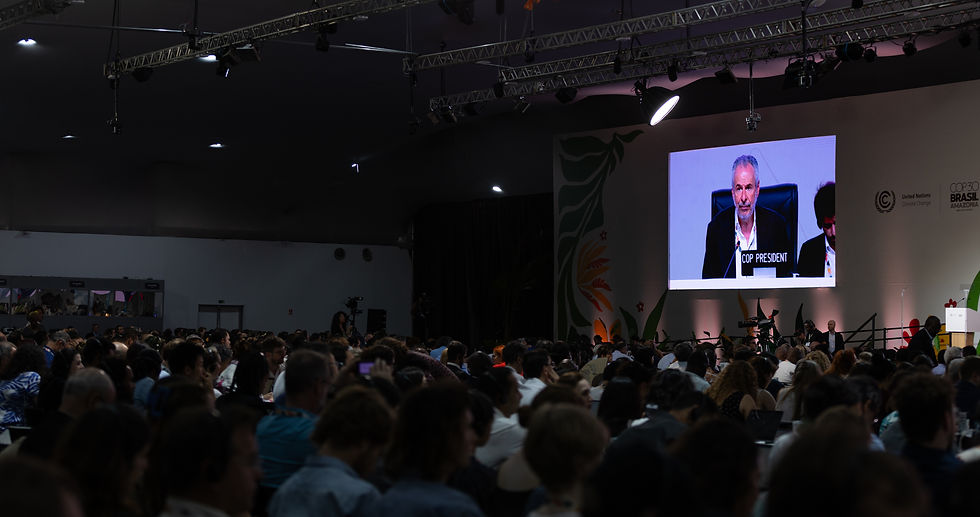
COP30 also featured, for the first time at a UN conference, AgriZone, a space open to the public dedicated to tropical agriculture and livestock farming. Organized by Embrapa in partnership with public and private institutions, AgriZone brought together around 400 events, including panels, technological exhibitions, and practical demonstrations of agroforestry systems and low-carbon agriculture. This new feature attracted more than 25,000 visitors over twelve days, including COP delegates, researchers, producers, technicians, and the population of Belém, clearly demonstrating that agriculture can engage with science, climate, and society. Even so, I believe that to make the role of livestock farming and dairy production a reality, we need to go beyond parallel spaces: it is essential that the sector be present in central discussions, not just in sectoral showcases.

And now, milk?
Dairy farming is significant in terms of GDP, jobs, nutrition, income, and emissions. There is no simple answer; we need to consider, adjust, and adapt. The sector will be questioned, and rightly so. We need to respond with numbers, transparency, and clear methodology. Incomplete or poorly detailed reports open the door to legitimate doubts, loss of competitiveness, and distrust from investors, partners, and consumers.
Technology, data and animal health
Mitigation and removal are not mutually exclusive alternatives; we need both. Fossil fuels remain the most difficult issue to advance, but the Brazilian presidency of COP27 committed to building a voluntary roadmap for phasing out fossil fuels and ending deforestation.
From the perspective of the dairy industry, the main message is clear: implement. We already know what to measure, how to measure it, and how to act. Now it's time to transform, or regenerate, the way we produce food.
The panel, which brought together various stakeholders, including the Global Roundtable for Sustainable Beef and Action for Animal Health, reinforced the point that 20% of global livestock production is lost due to sanitary issues. By improving health, genetics, and nutrition, we can reduce global livestock emissions by up to 30%. This requires professionalism: data, control, and management.
From a milk production standpoint, the message is clear: it's time to implement. The metrics are known, the methods are established, and the solutions already exist. The next step is to integrate all of this into the farm's routine and adjust how we produce feed.
The decisive decade for methane.
We are halfway through a crucial decade for addressing methane. If we are part of the problem, we need to be part of the solution. And that requires abundant, consistent, and transparent data that can show where we are and how we are progressing.
During the Global Ethical Balance panel, Natalie Untersell, from the Talanoa Institute, quoted Minister Marina Silva: "Change doesn't come from the center, it comes from the cracks." This idea reinforces the power of individual action, collaboration between people and institutions, and initiatives that start small but transform entire systems.
Responsibility and transparency
In closing, I return to a reflection by Johan Rockström in an interview with Capital Reset: we need transition and mechanisms that hold each country accountable for the commitments it has made. Revising targets is not enough; compliance is necessary. This vision also applies to the dairy sector, which needs to define what to measure, how to measure it, and report, clearly and consistently, where we are and where we want to go.
In the end, everything converges on the idea that inspires the title of this column: we will need everyone, data, cooperation, and courage to transform the future of milk.


The "Integral Sustainability" column is a column published by ESGpec in Leite Integral magazine , which has established itself as a space for dialogue between science, innovation, and practice in the field. Each article invites reflection on the future of dairy farming and on how we can balance productivity, animal welfare, and environmental responsibility.
Check out all the columns published in the magazine:
1️⃣ The wind of change — a call to recognize that the time for sustainability has arrived and that agriculture needs to act now.
2️⃣ Modern times — practical and technological solutions to reduce methane emissions in livestock farming.
3️⃣ Beyond the horizon — a vision of how innovation and regeneration open new paths for the milk of the future.
4️⃣ Simple way — how each producer's choice can transform livestock farming, making ESG something accessible and real in the field.
5️⃣ Nothing is by chance — animal behavior and welfare: The science applied to sustainable dairy production.
6️⃣ COP30: Time doesn't stop — What is the role of livestock farming on a planet under pressure?
7️⃣ COP30: We'll need everyone — What the world's largest climate conference revealed for Brazilian milk and why the next decade demands data, transparency, and real implementation in the field.
8️⃣ FROM JANUARY TO JANUARY: Sustainability starts with the basics — This article shows how consistent decisions, from herd management to soil care, reduce emissions and increase efficiency in milk production.
🌿 This column is the result of a partnership between ESGpec and Revista Leite Integral , and reinforces our commitment to making sustainability a practical, measurable, and inspiring topic.


